
Company Website
Soulroom.vn Case Study: Turning a Website Into an Owned Brand Channel
Jun 17, 2026 · 8 min read
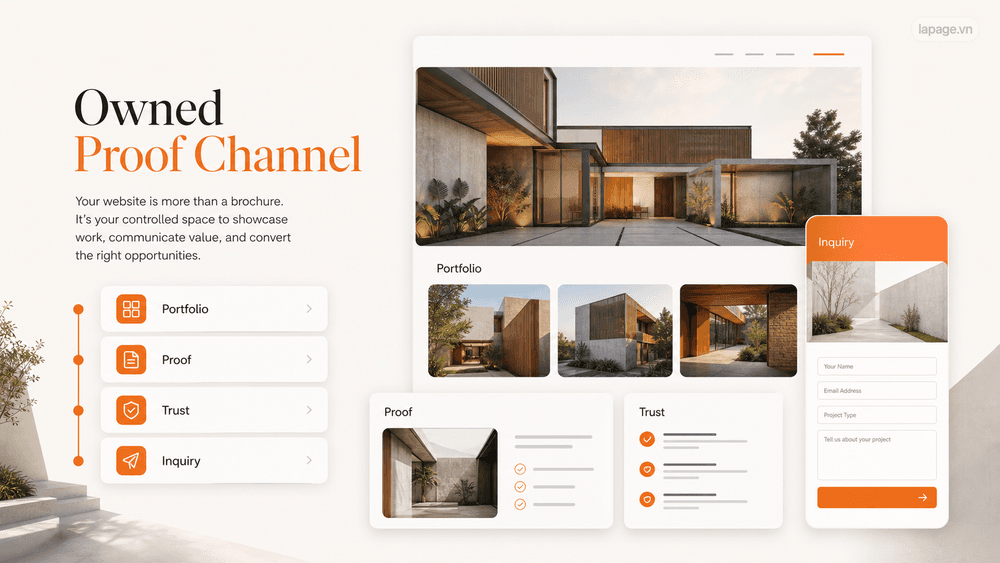
A LaPage Digital case study on shaping Module K’s company website as an owned proof channel for project credibility, portfolio trust, and direct inquiry conversations.
Module K (modulek.com.vn) is an architecture and design company with work connected to recognizable brands such as Vinamilk, Beta Cinema, and Katinat.
For a company like this, a website should do more than look professional. It should help the business turn real project credibility into something prospects can see, understand, and trust before the first meeting.
LaPage helped shape Module K’s company website as an owned proof channel: a central place for the business to present its work, communicate credibility, and support conversations with clients, partners, and future team members.
This is not a story about “building a website.” It is a story about making proof easier to own, organize, and share.
Architecture and design companies often grow through trust.
A potential client does not only ask, “Can you design this?” They also want to know:
Module K already had the most important asset: real work.
The founder context for this case study shows that Module K is an architecture and design company and has worked with major names including Vinamilk, Beta Cinema, and Katinat. Those kinds of brand associations matter because they help a new prospect understand that the company is not starting from zero.
But strong work is not always enough by itself.
If credibility only lives inside private conversations, old project files, scattered social media posts, or word-of-mouth referrals, the business has to keep re-explaining its value from the beginning.
That creates unnecessary friction.
Many good companies have proof, but they do not fully own the way that proof is presented.
They may have:
For a design company, this is a real business problem.
The website is often one of the first places a serious prospect checks. If the site does not clearly reflect the quality of the company’s work, the company loses a chance to build trust before the first call.
The hidden issue is not only design. It is ownership.
A company needs an owned place where its credibility is structured, reusable, and easy to send to the right person at the right time.
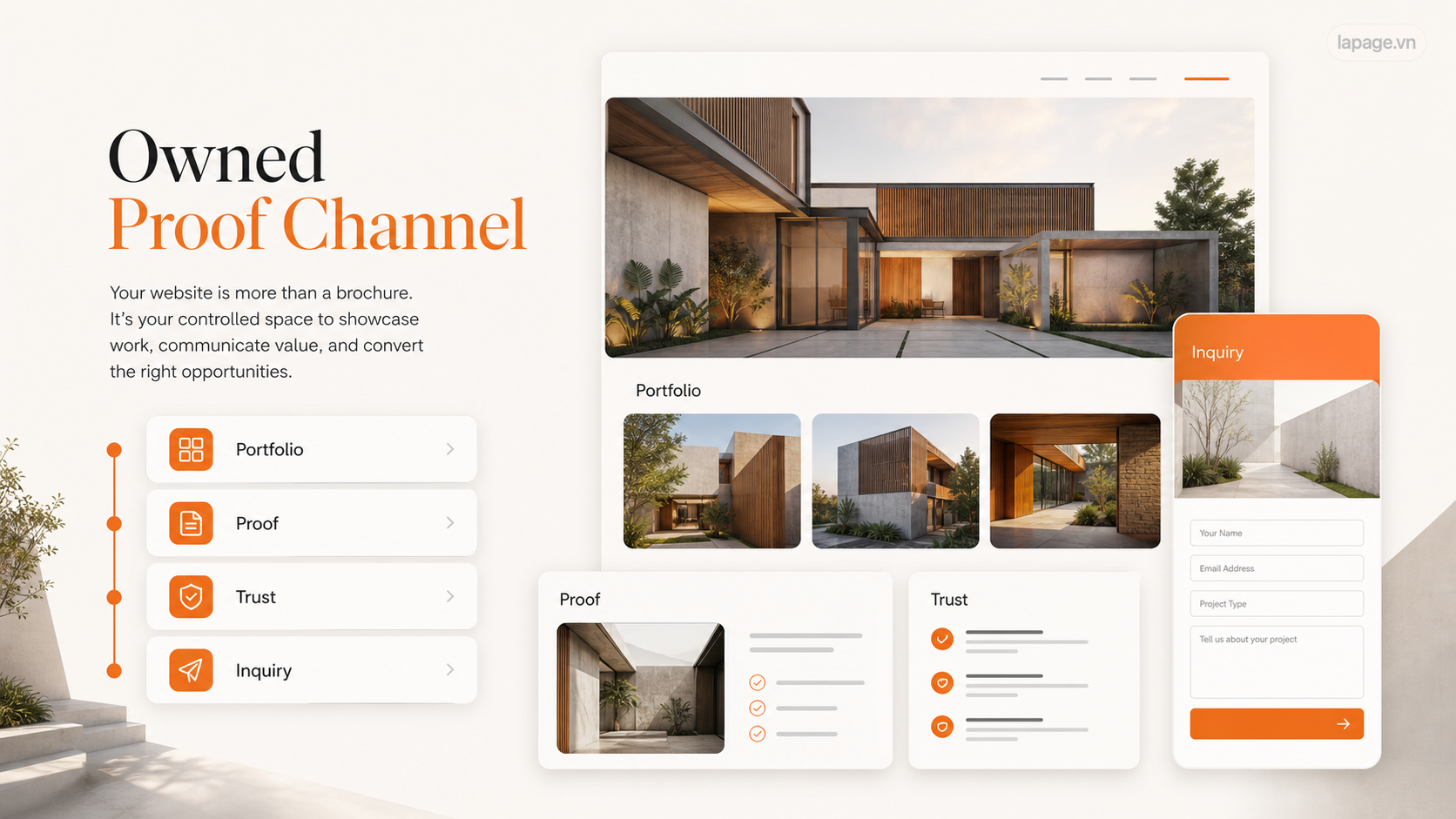
LaPage helped Module K approach the company website as a business asset, not just a presentation layer.
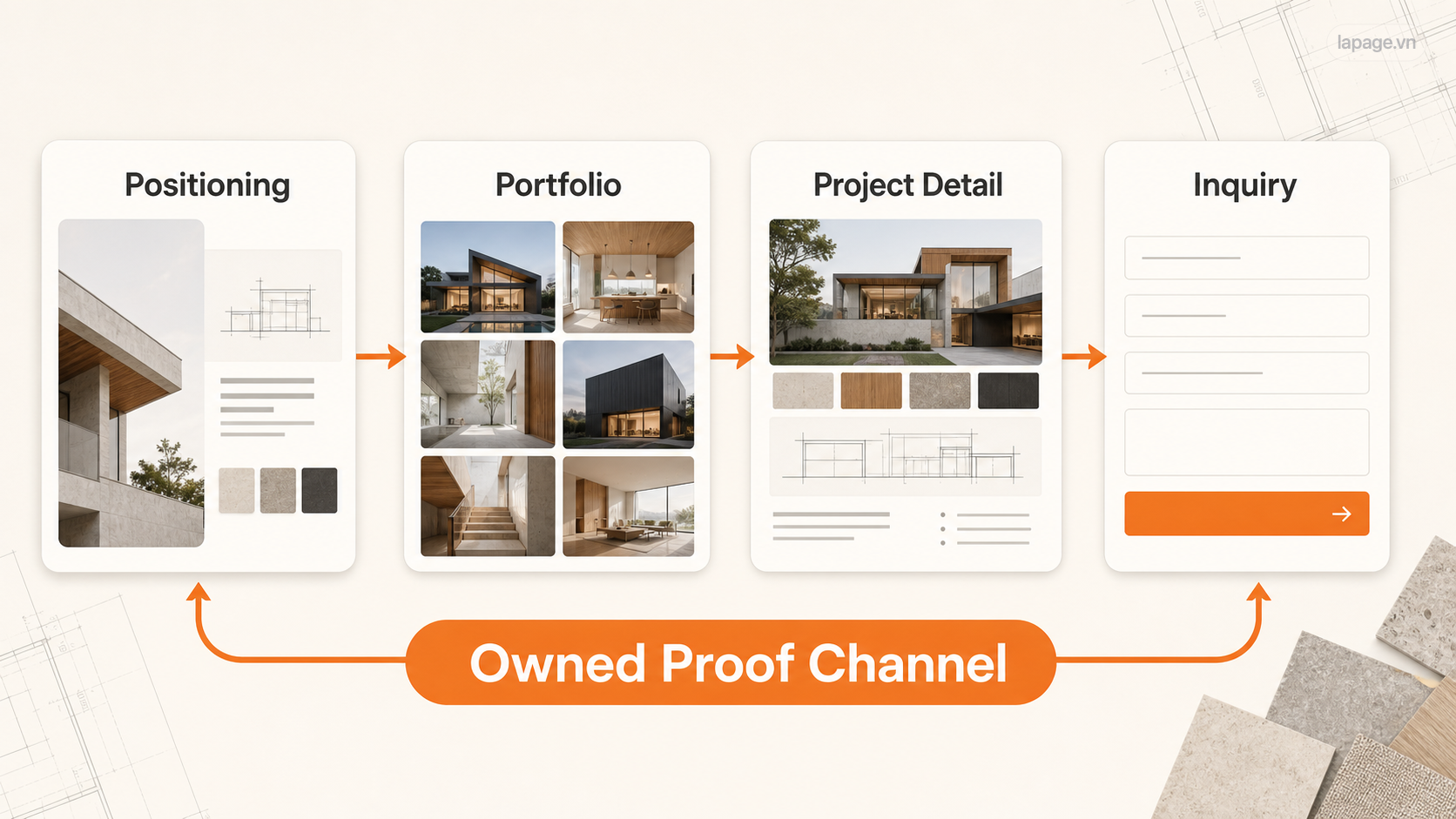
The goal was to create an owned proof channel that could support trust in a simple way:
For businesses like Module K, this matters because the website becomes part of the sales process.
It helps answer the early trust questions before the team has to explain everything manually. It gives prospects a place to review the company’s work. It helps the business present itself with more consistency than scattered posts or one-off files.
Most importantly, it gives Module K a channel it owns.
A strong company website does not replace relationships. It supports them.
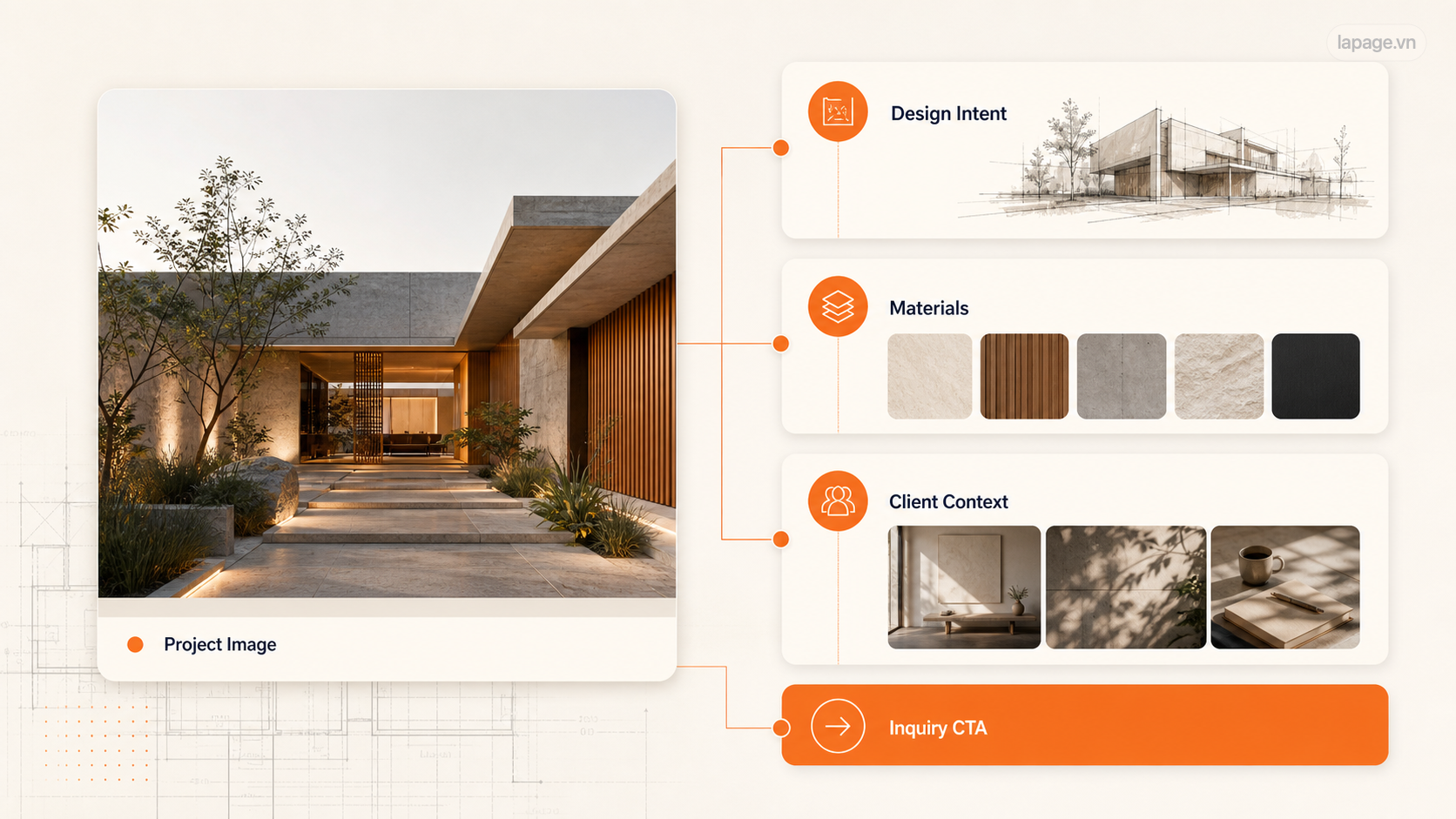
When a prospect hears about Module K through a referral, sees the company mentioned somewhere, or receives a link from the team, the website can help turn curiosity into confidence.
That confidence is built through clear proof:
This is especially important for architecture, interior, and design companies because the buying decision is not purely technical. Clients are buying judgment, taste, process, reliability, and trust.
A website cannot prove everything. But it can make the first layer of proof easier to see.
It also protects the business from relying too heavily on rented or scattered channels. Social platforms are useful, but they are not the same as an owned home for the company’s best work. A PDF can be useful, but it is harder to maintain as a living business asset. Referrals are powerful, but they work better when the referred prospect has a credible place to learn more.
The website becomes the business’s proof base.
After this kind of website work, the business owns more than pages on a domain.
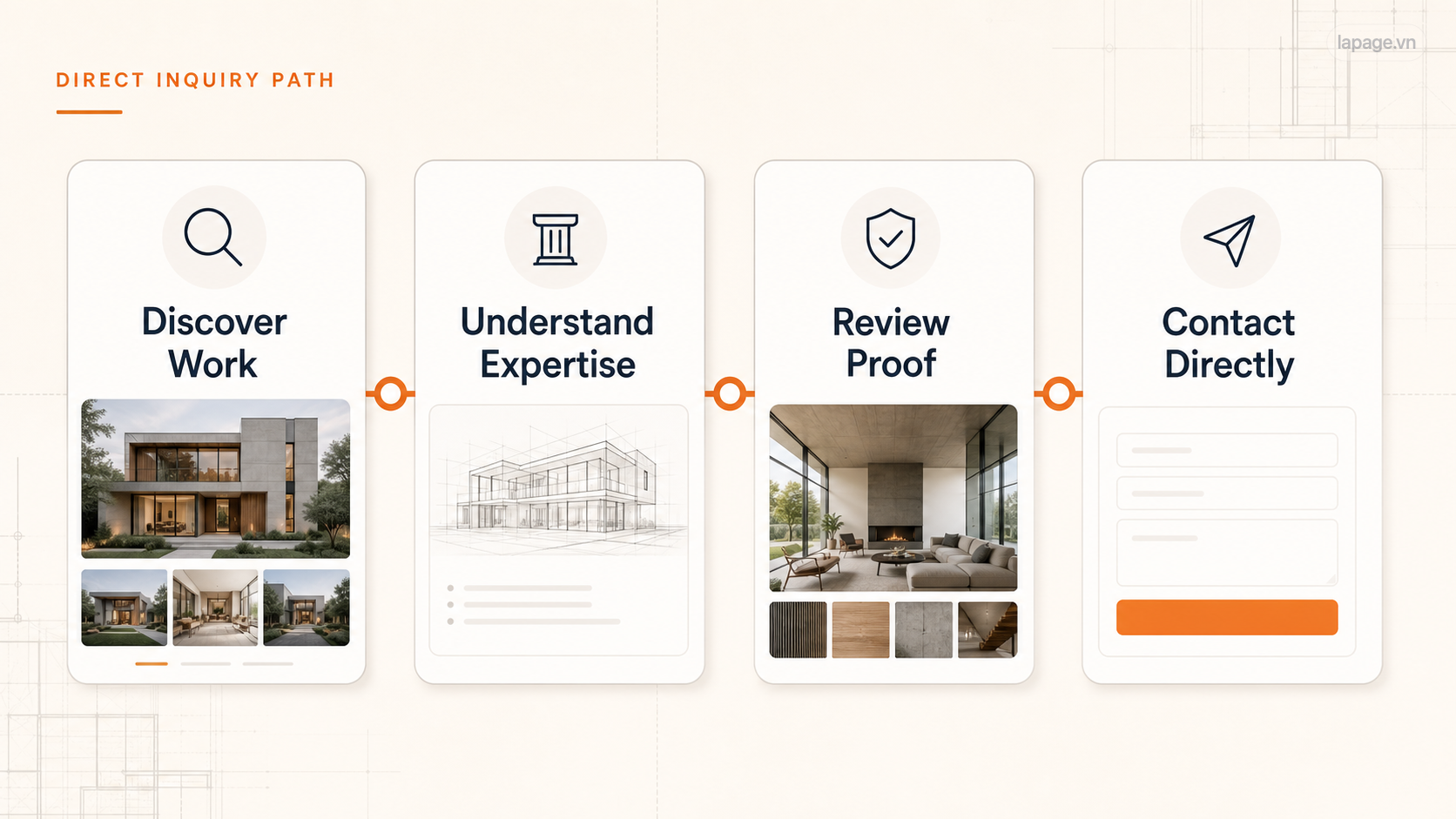
It owns a clearer proof system.
For Module K, that means the company can build around:
This is the difference between having a website and owning a business channel.
A normal website says, “Here is our company.”
An owned proof channel says, “Here is why you can trust us.”
Module K’s website is best understood as a credibility asset.
The company already had meaningful work and recognizable trust signals. The opportunity was to make that proof easier for the market to see, understand, and reuse.
That is the role a company website should play for serious service businesses.
It should not be a decorative online brochure. It should be a practical business system that helps the company own its proof, support sales conversations, and reduce trust friction before the first meeting.
For LaPage, this is the bigger lesson:
A company website is valuable when it turns real business credibility into an owned channel.
If your business already has strong work but your website does not clearly show why customers should trust you, LaPage can help you review it.
Start with a System Clarity Audit or a website ownership review.
We will look at how your current website supports credibility, customer ownership, proof, inquiries, and future growth — and identify what should become a stronger owned business asset.
LaPage Digital documents real delivery work across architecture, automation, infrastructure, and operational systems.
Subscribe to our newsletter to receive technical insights and updates on best practices for web development and hosting infrastructure.