When a Clothes Rental Shop Outgrows Spreadsheets: The Tiệm Thanh Xuân Example
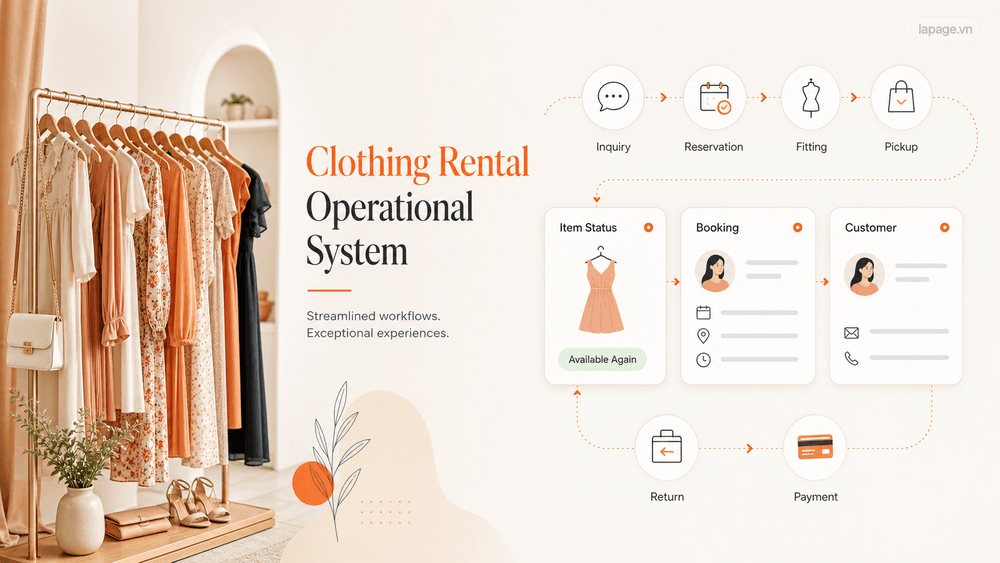
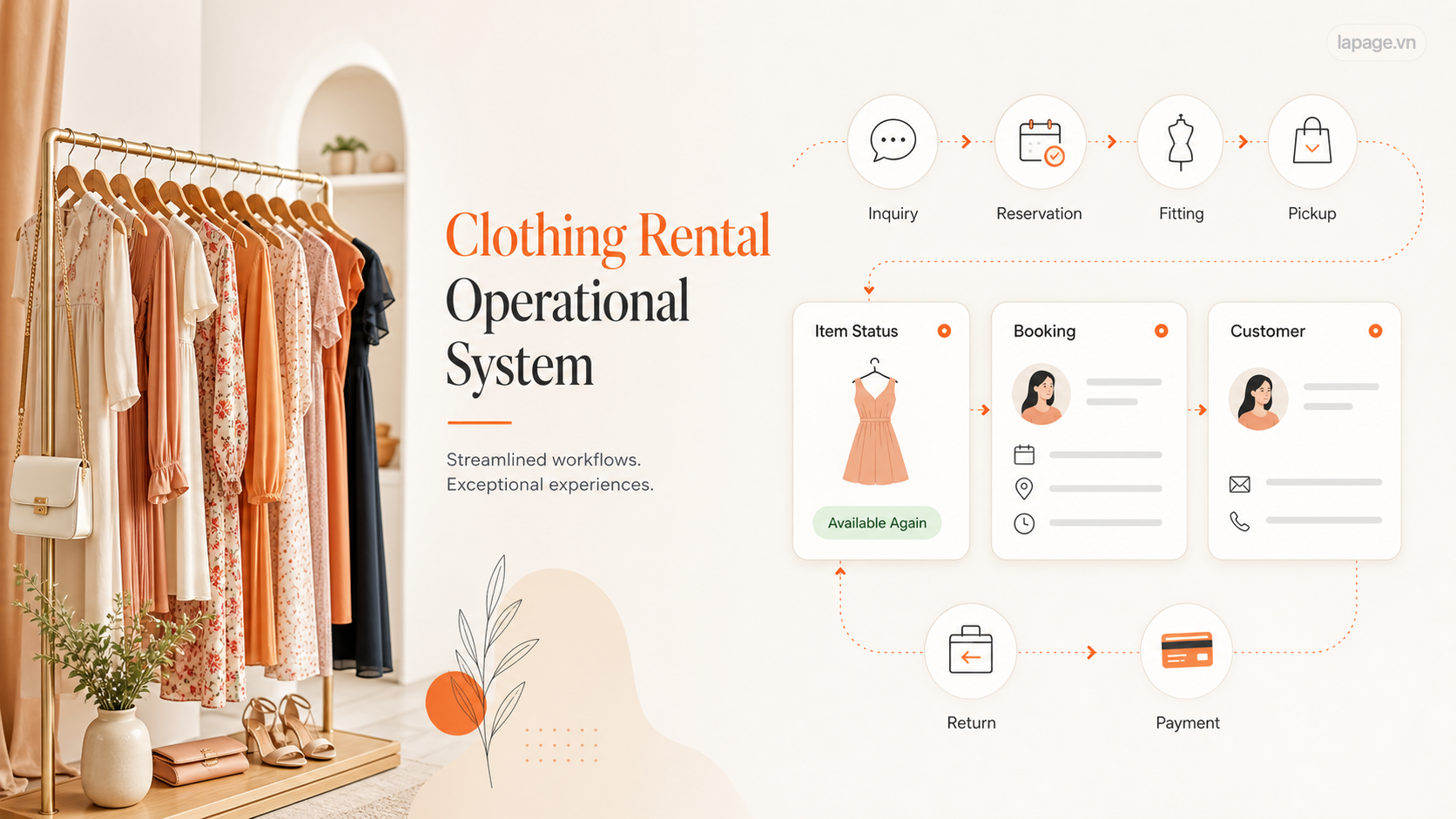
Tiệm Thanh Xuân is used as a practical example of why rental and service businesses often need more than a website or generic sales software. The article explains how a rental management web app can structure bookings, item lifecycle, customer records, payments, and operational visibility.
When a Clothes Rental Shop Outgrows Spreadsheets: The Tiệm Thanh Xuân Example
Summary
A clothes rental business is not managed like a normal product shop.
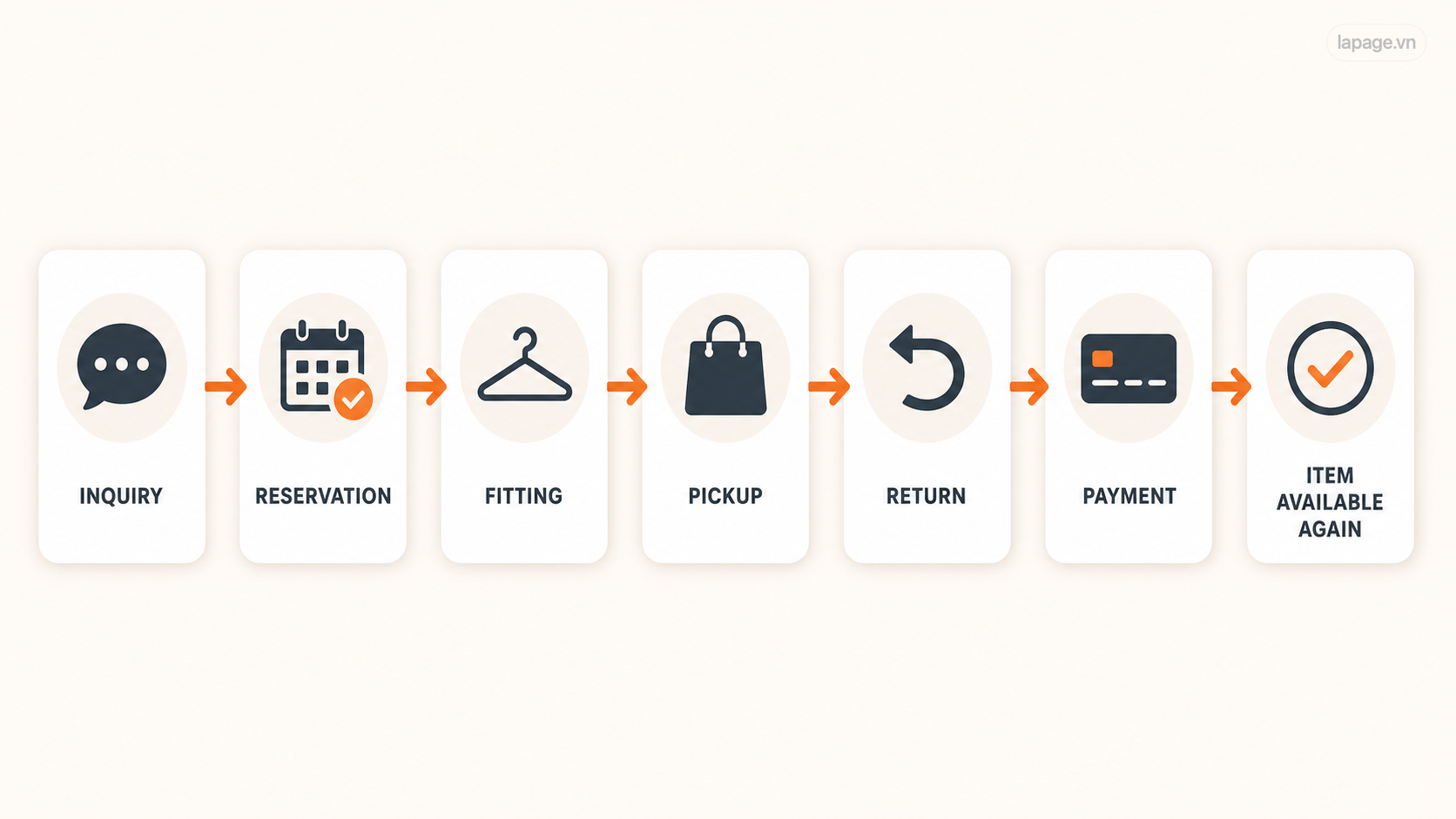
In a normal retail workflow, the business sells an item, records the order, collects payment, and moves on. In a rental workflow, the same item can be booked, reserved, rented out, returned, checked, cleaned, repaired, and rented again. The business is not only managing sales. It is managing time, availability, item condition, customer records, deposits, balances, and follow-up work.
That is why many rental businesses eventually outgrow spreadsheets, chat messages, and memory.
Tiệm Thanh Xuân, a women’s clothes rental brand, is a useful example. LaPage supported the business by building a rental management system that helps the owner track rentals, cashflow, item status, and daily operational information in one clearer place.
The lesson is broader than one shop: if a business depends on repeated bookings, inventory availability, and customer follow-up, it needs more than a website. It needs an operating system it owns.
The Real Problem Is Not “Selling Online”
Many small businesses first think the next step is a website.
That is understandable. A website helps customers discover the brand, understand the offer, and make contact. But for a clothes rental shop, the deeper problem often sits behind the website.
A customer may ask:
- Is this outfit available on this date?
- Can I reserve it?
- How much is the deposit?
- When should I return it?
- What happens if it is late, damaged, or needs cleaning?
The owner then has to connect that conversation to the item, the calendar, the customer, the payment, and the next operational task.
If those pieces live in separate places, the website can create more inquiries, but the operation can still become harder to control.
That is why a rental business often needs a management system before it needs more traffic.
Why Generic Sales Software Is Not Enough
A normal sales management tool can record customers, orders, products, and revenue. That is useful, but it does not fully match how rental operations work.
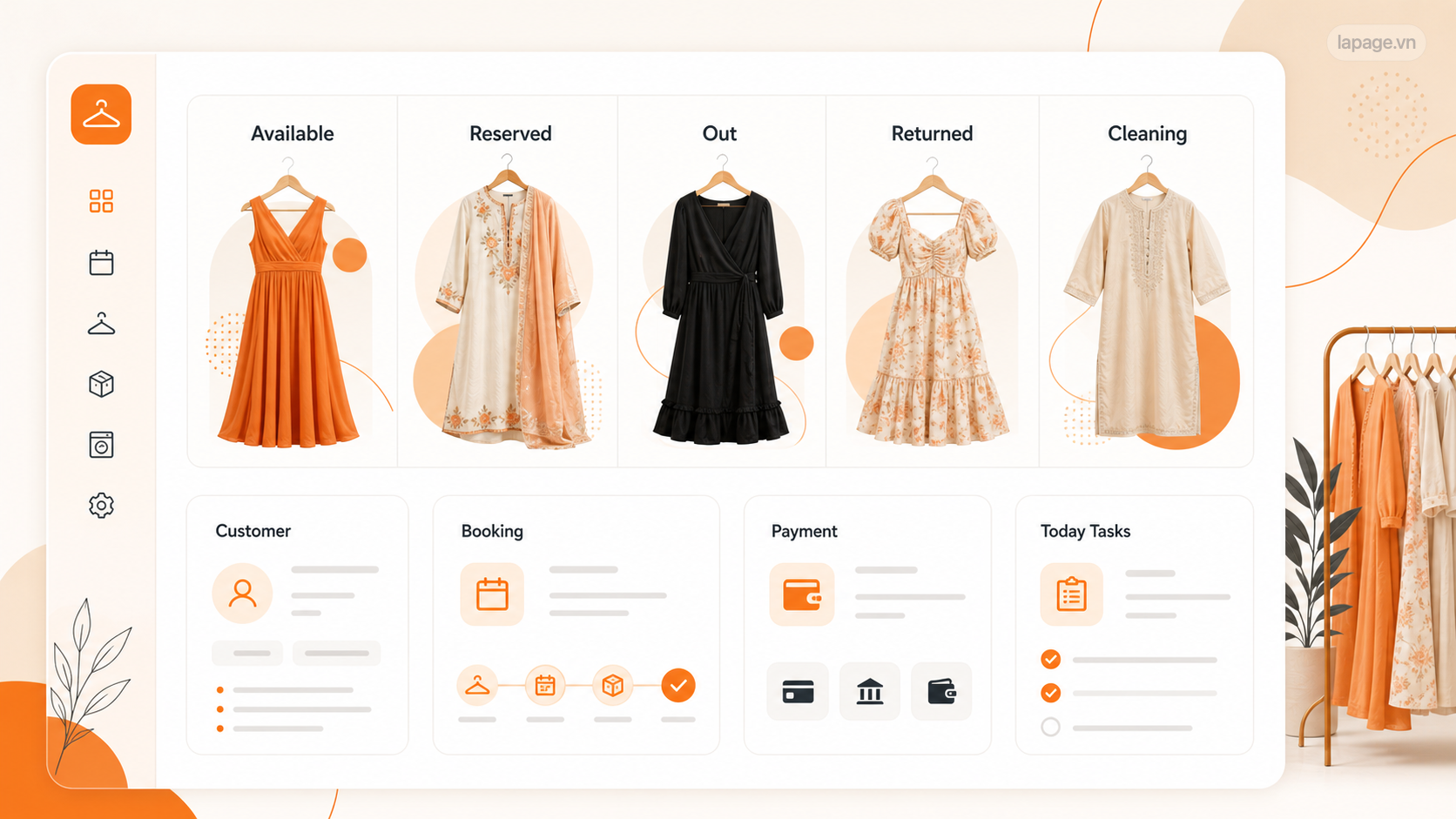
Rental items do not simply leave inventory forever. They move through a lifecycle.
An item may be:
- Available for rent.
- Reserved for a future date.
- Currently with a customer.
- Returned and waiting for inspection.
- Being cleaned or repaired.
- Temporarily unavailable.
A useful system needs to understand those states. It also needs to connect them to dates, customers, payment status, and daily tasks.
This is where a business-specific web app becomes more valuable than a generic tool. It can be shaped around how the business actually operates, instead of forcing the owner to adapt their workflow to a tool designed for a different type of business.
In Vietnamese, people may search for this kind of solution as “phần mềm quản lý bán hàng” or “phần mềm cho thuê quần áo.” The important point is not the label. The important point is whether the software reflects the real workflow.
What the Rental Workflow Needs to Track
A clothes rental operation needs visibility across several connected areas.
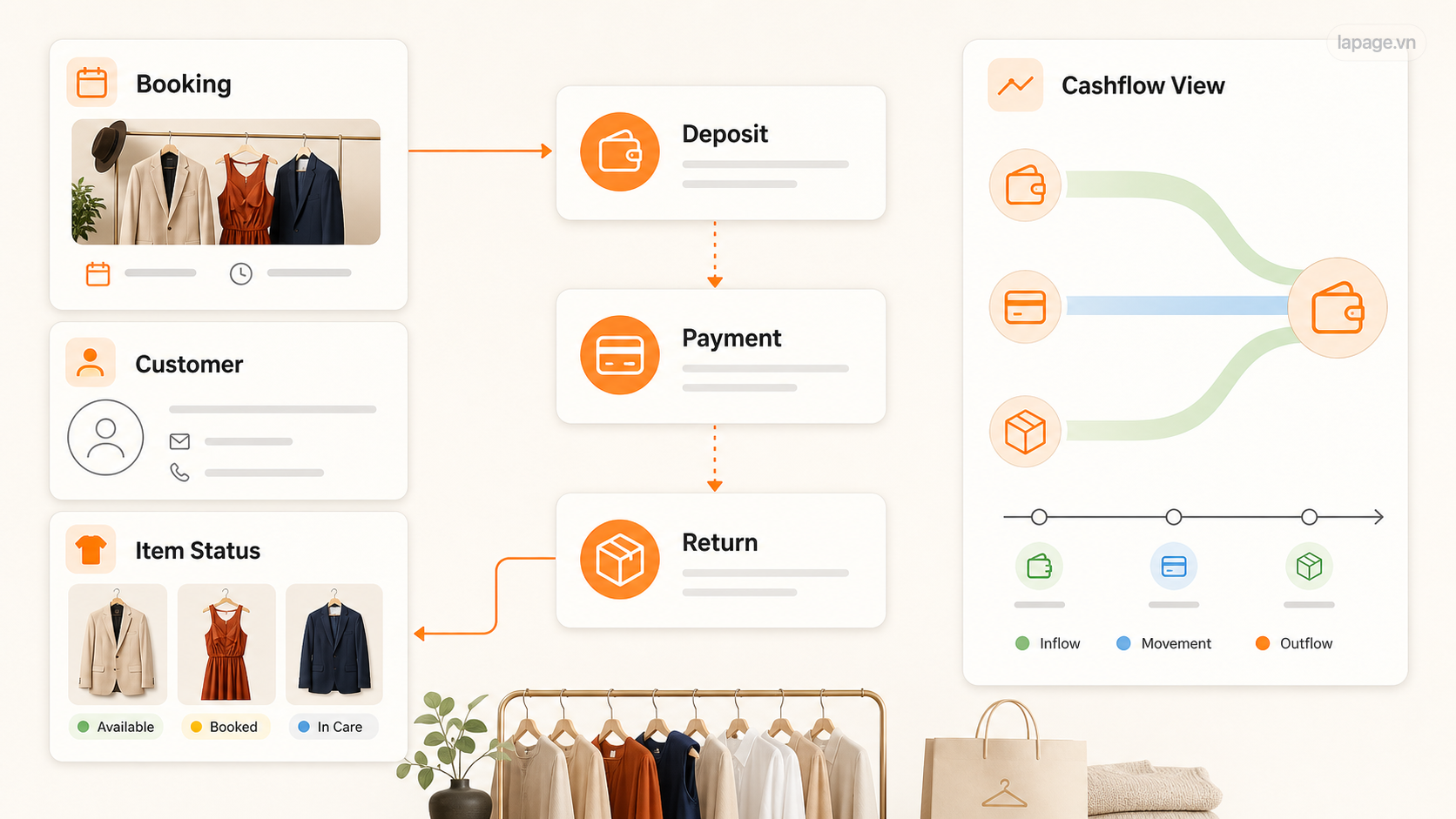
It needs to know what items exist, whether they are available, and what condition they are in. It needs to know which customer booked which item, for which date, with what deposit, and what balance remains. It needs to know when the item should return and what must happen before it can be rented again.
If one part is missing, the owner has to fill the gap manually.
For example:
- If availability is not clear, the owner may double-book an item.
- If payment is not connected to the booking, cashflow becomes harder to check.
- If customer records are scattered in messages, repeat service becomes harder.
- If item status is not tracked, the shop may promise something that is not ready.
- If daily tasks are not visible, cleaning, checking, or follow-up can be missed.
The system LaPage built for Tiệm Thanh Xuân focused on making these operational details easier to see and manage.
Tiệm Thanh Xuân as an Example
Tiệm Thanh Xuân is not used here as a “website example.” It is an example of a small business with a real operational workflow behind the customer-facing brand.
The business needs to manage more than product presentation. It needs to manage the rental cycle.
LaPage helped structure a system around practical areas such as:
- Rental lifecycle management.
- Item and availability status.
- Booking and customer records.
- Deposit, payment, and cashflow information.
- Daily operational visibility.
The value is not that the business received another screen to click. The value is that important information moved from scattered places into a system the business can control.
That changes the nature of the work. The owner no longer has to rely only on memory, messages, or separate spreadsheets to understand what is happening.
What Becomes Clearer
A good rental management system does not remove every operational challenge. It makes the operation easier to see.
That matters because visibility changes decision-making.
When the workflow is structured, the business can answer practical questions faster:
- What is available today?
- What is booked for this weekend?
- Which customers still need follow-up?
- Which items are waiting for cleaning or checking?
- Which bookings have deposits or unpaid balances?
- Which products are rented often enough to justify more investment?
These are not just admin questions. They are business control questions.
When a shop can see these answers, it can serve customers more reliably, protect cashflow, and reduce the amount of mental load required to run daily operations.
What the Business Owns Afterward
The strongest value of a custom operational system is ownership.
Tiệm Thanh Xuân does not only own a website or a set of screens. The business owns a clearer way to manage its work.
That owned asset can include:
- Product and rental item data.
- Customer records.
- Booking history.
- Payment and deposit records.
- Operational workflows.
- Business learning from repeated activity.
This matters because business knowledge should not live only inside chat history or the owner’s memory. If the information is important to the business, the business should be able to structure it, search it, learn from it, and build on top of it later.
That is the LaPage point of view: software should help the business own more of its operation, not simply digitize a messy process.
What Other Rental or Service Businesses Can Learn
The lesson from Tiệm Thanh Xuân applies beyond clothes rental.
Any business that handles bookings, repeated customer interactions, item availability, service schedules, deposits, or follow-up work can run into the same problem.
At first, informal tools feel faster. A spreadsheet is flexible. A message thread is convenient. A note is easy to create.
But as the business grows, flexibility can become fragility.
The question is not “Do we need software?”
The better question is:
“Which parts of our operation are too important to keep scattered?”
If the answer includes bookings, customers, payments, inventory, or daily tasks, then the business may need a system designed around its workflow.
Start With an Operations Review
Before building software, LaPage usually starts by reviewing the workflow.
For a rental or service business, that means mapping:
- What information must be captured.
- Where that information currently lives.
- Which steps create mistakes or delays.
- Which statuses need to be tracked.
- Which decisions the owner needs to make every day.
- Which reports would make the business easier to control.
Only after that should the business decide what to build first.
The goal is not to create a big system for the sake of it. The goal is to identify the smallest useful system that gives the business more control.
Tiệm Thanh Xuân is one example of that idea in practice: turn scattered rental activity into an owned operational system that the business can use, improve, and build on over time.
LaPage Digital
LaPage Digital documents real delivery work across architecture, automation, infrastructure, and operational systems.
Stay Updated
Subscribe to our newsletter to receive technical insights and updates on best practices for web development and hosting infrastructure.