Custom AI Agent setup for business

Turn the way your team works into an AI Agent built for the job.

LaPage designs and sets up AI Agents around your real workflows. They can research, prepare, coordinate, and use approved business Tools while your team keeps control of important decisions.

Built around one or more real business workflowsConnected only to the Tools and information it needsHuman approval for sensitive or uncertain actionsLogs, monitoring, documentation, and post-launch support

What LaPage provides

A working Agent system your team can put into daily use.

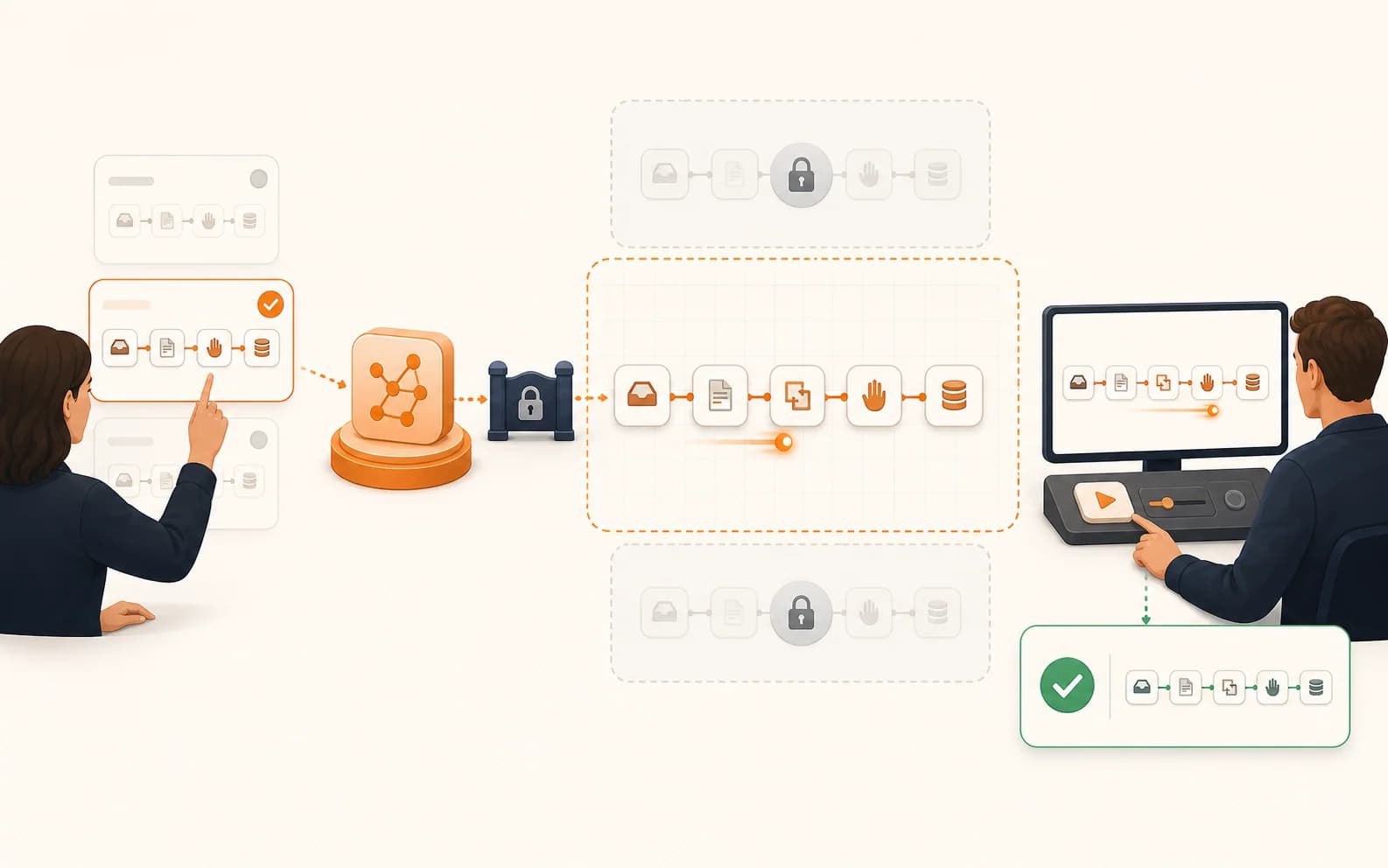
A business request enters a permission-limited AI Agent workspace, moves to human approval, and becomes a completed result with an activity record while an exception is handed back to a person.
01

Agent built for a real workflow

LaPage turns a defined sales, content, operations, reporting, service, or proposal task into a repeatable Agent workflow.

02

Approved Tool connections

The Agent can use the business information and Tools needed for its job without receiving unnecessary access.

03

Human approvals and exceptions

Sensitive actions pause for the right person, while uncertain or failed work becomes a visible handover.

04

Monitoring, training, and support

Logs, documentation, team onboarding, and agreed support turn the Agent into an operating system rather than a one-time demo.

The service includes the Agent, the approved Tool connections, the control rules, and the operating support required to use it responsibly.

Human controlledApproval recorded
What an Agent can do

Start with work that already costs your team time every week.

An Agent is most useful when it receives a recognizable input, follows a repeatable working method, pauses for judgment where needed, and produces a result someone can inspect.

01 / Sales Agent

Prepare the next sales conversation

Help a salesperson arrive prepared instead of searching through scattered notes and messages.

Business benefit

Salespeople can respond with better context and spend less preparation time on each qualified enquiry.

Input

A new enquiry, company name, and previous conversations.

Agent work

Research the business, summarize its likely needs, find relevant services, and prepare follow-up questions.

Human approval

The salesperson reviews the facts, positioning, and proposed reply.

Output

A useful lead brief, suggested response, and clear next action.

02 / Content Agent

Turn an approved idea into publishable content

Move from a business idea to consistent content without losing the company’s position or review process.

Business benefit

The business can produce and adapt more useful content while editors retain control of claims, tone, and publishing.

Input

An approved topic, customer insight, campaign, or structured brief.

Agent work

Research sources, prepare the draft, adapt it by channel or language, and run required checks.

Human approval

An editor reviews claims, tone, brand position, and final wording.

Output

Approved website, blog, email, or social content ready for publishing.

03 / Operations Agent

Coordinate recurring operational work

Keep routine work moving across people and systems without hiding exceptions.

Business benefit

Routine coordination requires less chasing, while important exceptions still reach the responsible person.

Input

A request, order, form submission, project update, or scheduled operating event.

Agent work

Gather the required information, check conditions, prepare updates, and route missing items to the right person.

Human approval

The process owner approves changes that affect customers, money, or commitments.

Output

Updated records, assigned actions, visible exceptions, and a complete activity trail.

04 / Reporting Agent

Explain what changed and what needs attention

Give managers a useful operating view instead of another dashboard they must interpret alone.

Business benefit

Managers receive a prepared explanation and follow-up list instead of spending the meeting assembling the story themselves.

Input

Approved sales, marketing, service, or operational data sources.

Agent work

Collect results, compare periods, identify unusual changes, and investigate likely causes.

Human approval

A responsible manager confirms interpretation before wider distribution or action.

Output

A concise report with evidence, exceptions, questions, and recommended follow-up.

05 / Customer Service Agent

Prepare reliable answers from company knowledge

Help the service team answer faster while keeping uncertain or sensitive cases with people.

Business benefit

Common questions can move faster and more consistently without allowing uncertain replies to reach customers unchecked.

Input

A customer question, account context, and approved support knowledge.

Agent work

Find relevant policy and history, draft the answer, and classify urgency or risk.

Human approval

Sensitive, exceptional, or low-confidence replies are routed to a service representative.

Output

A traceable response, escalation, or next-step request with its supporting sources.

06 / Proposal Agent

Prepare proposals and quotations consistently

Reduce repetitive preparation while keeping commercial judgment with the responsible person.

Business benefit

Account owners start from a structured, reviewable proposal and can focus their time on scope, price, and customer judgment.

Input

Discovery notes, requested scope, pricing rules, and approved service information.

Agent work

Structure requirements, identify gaps, assemble suitable options, and prepare the document.

Human approval

The account owner confirms scope, price, terms, and commitments.

Output

A reviewable proposal or quotation with assumptions and open questions clearly shown.

Why build this capability now

Your team may already use AI. The business still needs a controlled way to use it.

The opportunity is not simply to give everyone another AI account. It is to turn useful AI behavior into a reliable operating capability the company can understand, supervise, and improve.

01

Informal AI use is already happening

Employees may copy information into personal AI tools without shared rules, approved knowledge, or visibility into the result.

02

Useful knowledge stays scattered

People repeatedly search documents, messages, and systems because the working context is not assembled for them.

03

Preparation limits response speed

Research, comparison, summarization, and first drafts delay work even when a person still needs to make the final decision.

04

Uncontrolled AI creates hidden risk

Without Permissions, approval rules, logs, and exception handling, speed can come at the cost of accountability.

What you receive

Everything required to put the Agent into responsible use.

The deliverable is not a prompt or a demo. It is the designed workflow, connected system, operating controls, and knowledge your team needs to use and supervise it.

01

Workflow assessment

02

Agent design

03

Tool connections

04

Knowledge preparation

05

Permissions and approvals

06

Logs and monitoring

07

Testing and recovery

08

Training and support

Uncertainty becomes a visible handover—not an invented answer.

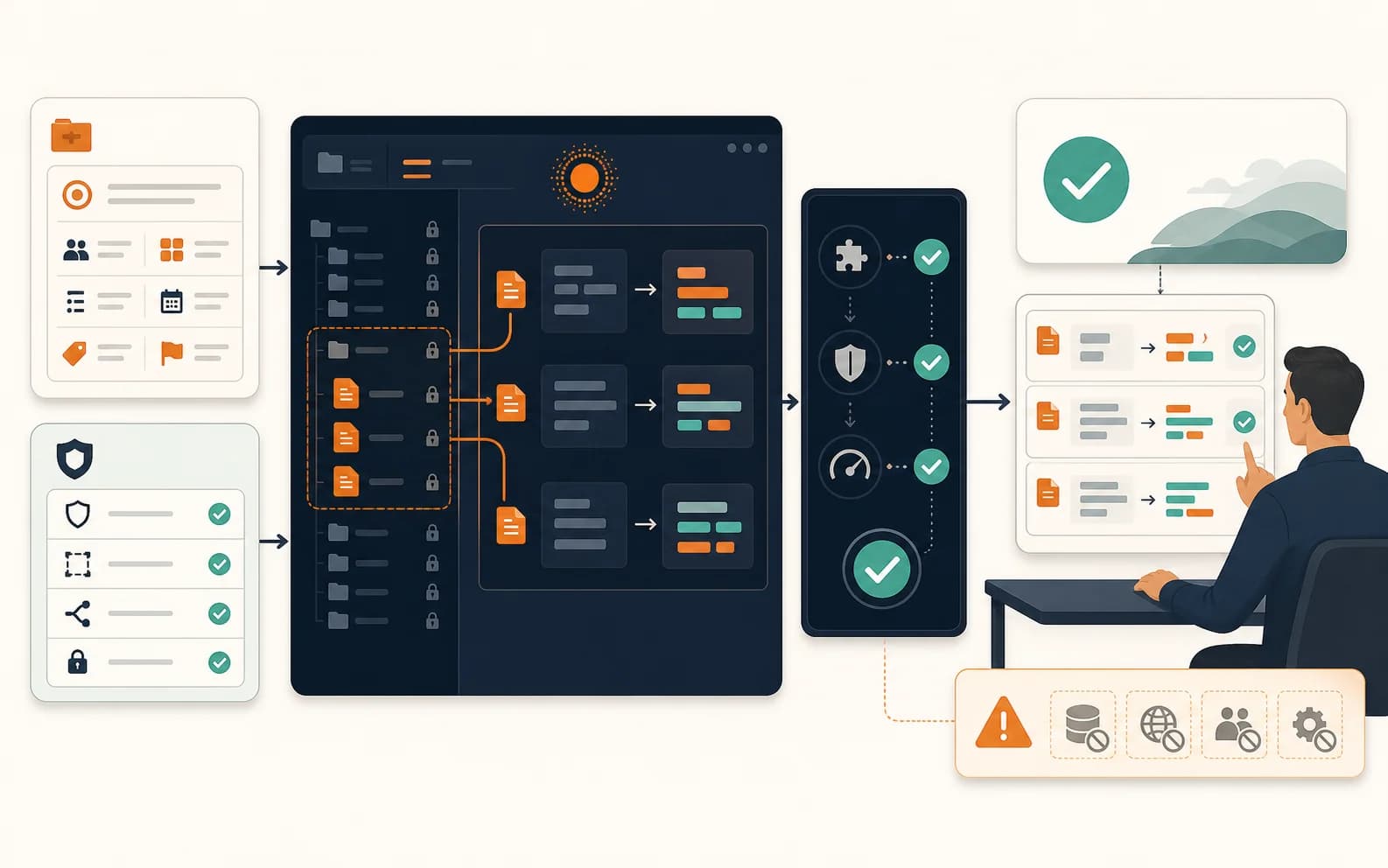
If information conflicts, a Tool fails, confidence is low, or the request is outside the Agent’s job, it stops and shows the responsible person what needs attention.

01

Named approval points

02

Limited Permissions

03

Inspectable activity

04

Exception and recovery paths

Designed for real operations

Useful autonomy inside clear business control.

An Agent should move work forward without pretending it has unlimited authority. We design the control points before connecting it to important systems.

Uncertainty becomes a visible handover—not an invented answer.

If information conflicts, a Tool fails, confidence is low, or the request is outside the Agent’s job, it stops and shows the responsible person what needs attention.

01

Named approval points

Sensitive actions wait for the right person to inspect and approve them.

02

Limited Permissions

The Agent receives only the records, Tools, and actions required for its defined work.

03

Inspectable activity

The team can see what the Agent read, prepared, requested, changed, or could not complete.

04

Exception and recovery paths

Retries, rollback, escalation, and human takeover are part of the system design.

Typical delivery and investment

Choose the smallest level that can prove useful business value.

We recommend starting with a defined workflow, making its behavior visible, and expanding only after the team has operating evidence.

1
Agent Pilot

VND 15–30 million

Typical delivery: 2–3 weeks

Prove one focused workflow

A contained Agent for a well-defined task, limited Tools, clear review points, and real-user testing.

2
Operational Agent

VND 40–80 million

Typical delivery: 4–8 weeks

Put an Agent into daily work

A production-ready Agent with deeper knowledge, multiple connections, controls, monitoring, training, and support.

3
Department System

From VND 100 million

Typical delivery: 8–12+ weeks

Coordinate several related workflows

A broader Agent system serving a department, with more roles, systems, environments, governance, and operating requirements.

These are typical ranges, not fixed quotations or delivery guarantees. Discovery confirms the appropriate scope, timeline, and commercial structure.

How fees are calculated

You pay for operating scope and responsibility—not for the number of prompts.

The fee reflects how much real work the Agent must understand, how many systems it touches, and how carefully its actions need to be controlled and supported.

Ongoing monitoring, support, and improvement

Typically VND 3–15 million per month, depending on operating volume, response expectations, integrations, and improvement scope.

The main scope factors

01Number and complexity of business workflows
02Number and complexity of Tool connections
03Amount of business knowledge to prepare
04Permission, approval, and exception requirements
05Monitoring, logging, and audit requirements
06Departments, roles, and operating environments
07Testing, training, documentation, and handover
08Ongoing support and improvement responsibility

Model, API, and third-party service usage is quoted separately or included up to an agreed allowance, so variable operating costs remain visible.

Working Agent examples

Inspect how the work, Tools, approvals, and limits fit together.

Until a customer case has publishable evidence, we show working systems and documented demonstrations rather than inventing performance claims.

An editor provides a brief and source material, an AI Agent prepares a website page through a locked CMS connection, and a person reviews and publishes the result.

MCP-enabled CMS

Manage website content through an authorized Agent

An Agent can find, prepare, localize, and update website content through CMS Tools while publishing remains within assigned Permissions.

  • The task and relevant content are provided as Context.
  • CMS actions happen through approved MCP Tools.
  • Review and publishing follow the configured access boundary.
See the CMS capability
An operator selects one approved workflow, an AI Agent builds inside its restricted boundary, and a person tests the workflow before approval.

n8n workflow building

Let an Agent build inside an approved n8n workflow

The Agent works only with workflows explicitly enabled through n8n MCP, then helps create, inspect, validate, and test them.

  • The operator controls the MCP connection and available workflows.
  • The Agent builds within that explicit boundary.
  • A person inspects and tests the workflow before normal use.
Inspect the n8n MCP guide
A project brief and repository rules guide an AI coding Agent to change only approved files, run validation, and return passed checks and visible limitations for human review.

Controlled project execution

Turn a structured brief into implemented, validated work

Codex can read project rules, use defined Skills and Tools, change approved files, run checks, and return the result for review.

  • The brief defines the desired business result.
  • Project guidance and Skills define the working procedure.
  • Validation and remaining limitations are returned to a person.
Read how Codex works

These examples demonstrate inspectable behavior and controls. They are not presented as customer case studies, guaranteed savings, or fully autonomous systems.

Bring one real task

Which repetitive, knowledge-based task should your team stop rebuilding from scratch?

Bring one task that involves searching, preparing, comparing, coordinating, or moving information between Tools. We will help you determine whether it is a good Agent opportunity and what a responsible first version should include.

Call: +84 981 690 658
Message us on Facebook
Zalo
Contact us on Zalo
Contact us